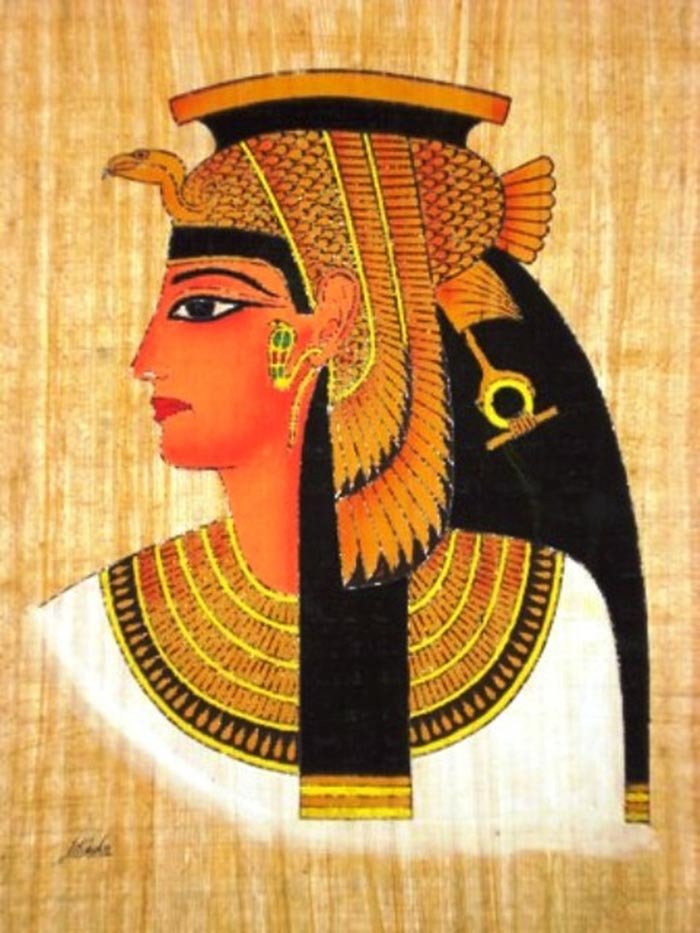
Cleopatra VII’s Life and Powerful Ptolemaic Family Origins
When you hear the name Cleopatra, a whirlwind of images probably comes to mind: a seductive queen, powerful Roman leaders, and the dramatic end of an empire. But beyond the legends and Hollywood portrayals, understanding Cleopatra VII’s life and powerful Ptolemaic family origins reveals a story far more complex, strategic, and profoundly human. She wasn't just a beauty who charmed men; she was a brilliant strategist, a formidable politician, and the last beacon of an ancient Greek dynasty that ruled Egypt for nearly three centuries. Her reign was a desperate fight for survival, both for herself and for the land she loved, against the relentless tide of Roman expansion.
At a Glance: The Last Pharaoh's Enduring Legacy
- Who She Was: The final pharaoh of Egypt's Ptolemaic dynasty, a Greek family that ruled Egypt for nearly 300 years.
- Born Into Power: Descended from Ptolemy I Soter, one of Alexander the Great's most trusted generals, inheriting a kingdom steeped in Hellenistic tradition but vulnerable to Roman ambition.
- A Political Chess Master: Masterfully navigated complex alliances with Roman generals Julius Caesar and Mark Antony, using her intellect, charm, and resources to protect Egypt's sovereignty.
- A Polyglot and Patron: Fluent in at least nine languages (including ancient Egyptian, a first for her dynasty) and a fervent supporter of arts, sciences, and the legendary Library of Alexandria.
- The End of an Era: Her defeat alongside Mark Antony at the Battle of Actium led to her dramatic suicide and Egypt's annexation as a Roman province, marking the end of Hellenistic Egypt.
- An Enduring Mystery: The exact circumstances of her death—whether by asp or assassination—remain a subject of historical debate.
The Ptolemaic Legacy: A Dynasty Forged in Conquest
To truly grasp Cleopatra, you must first understand her origins. She wasn't Egyptian in the traditional sense, but Greek. Her family, the Ptolemaic dynasty, sprang from the ashes of Alexander the Great's vast empire. When Alexander died suddenly in 323 BCE, his generals, known as the Diadochi, carved up his territories. One such general, Ptolemy I Soter ("Savior"), claimed Egypt, establishing a lineage that would rule for nearly 300 years.
This was a Hellenistic dynasty, meaning Greek culture, language, and governance dominated, even as they adopted some Egyptian traditions, like becoming pharaohs and worshipping Egyptian gods. They built Alexandria, a shining beacon of Hellenistic civilization, with its famous lighthouse (the Pharos) and the unparalleled Library of Alexandria. However, by Cleopatra VII's birth in 69 BCE, the Ptolemies were a shadow of their former glory. Internal power struggles, corruption, and the ever-looming shadow of Roman expansion had chipped away at their authority and wealth. Cleopatra was born into a family that, despite its royal status, was increasingly desperate and often ruthless in its pursuit of power, a tradition she would both inherit and embody.
Cleopatra's Early Life and Precarious Ascension
Cleopatra Thea Philopator ("father-loving goddess") was born the third of six children to Pharaoh Ptolemy XII Auletes, a ruler whose nickname "Auletes" (the Flute Player) hinted at his artistic leanings, though he was more known for his extravagant spending and reliance on Roman backing. Life in the Alexandrian court was a viper's nest of intrigue, assassinations, and sibling rivalries—a standard operating procedure for Ptolemaic succession.
When her father died in 51 BCE, 18-year-old Cleopatra, already politically astute, ascended to the throne alongside her ten-year-old brother, Ptolemy XIII, as dictated by Ptolemaic tradition. Co-rule was rarely peaceful, and their relationship quickly devolved into open conflict. She was older, more experienced, and clearly the dominant figure, which inevitably threatened the ambitions of Ptolemy XIII's regents. This power struggle escalated, forcing Cleopatra to flee Alexandria and gather an army in Syria, setting the stage for her dramatic return.
Caesar's Intervention: A Power Play in Alexandria
The stage for one of history's most iconic meetings was set by a different Roman. In 48 BCE, as Cleopatra was regrouping, her brother Ptolemy XIII made a fatal mistake: he ordered the assassination of Gnaeus Pompey Magnus, a prominent Roman general who had sought refuge in Egypt after being defeated by his rival, Gaius Julius Caesar. This act, meant to curry favor with Caesar, instead disgusted him.
When Caesar arrived in Alexandria, ostensibly to mediate the Ptolemaic sibling dispute and collect a debt owed by Auletes, he found himself entangled in a full-blown civil war. Cleopatra, ever the pragmatist, saw her opportunity. According to legend, she had herself smuggled into the royal palace, famously rolled in a carpet (or a bed sack, depending on the source), to meet Caesar in person. This audacious move captivated the Roman general. She didn't just meet Caesar; she seduced him, convincing him to back her claim to the throne.
With Caesar's legions, Cleopatra regained her power. Ptolemy XIII's forces were defeated, and he drowned in the Nile in 47 BCE during the Alexandrian War. Cleopatra was once again on the throne, this time with another younger brother, Ptolemy XIV, as co-ruler. Soon after, she gave birth to a son, Ptolemy Caesar, affectionately known as Caesarion ("little Caesar"), securing her hold on both Egypt and Caesar's affections, though Caesar publicly never acknowledged him as his heir. She had skillfully used Roman power to reassert her authority, but this alliance also inextricably linked Egypt's fate to Rome's turbulent politics.
After Caesar: Navigating Treachery and Consolidating Power
Cleopatra’s alliance with Caesar brought unprecedented access to the heart of Roman power. She famously visited Rome with Caesarion, staying in Caesar's private villa. Her presence caused a sensation, fascinating and unsettling the Roman elite in equal measure. She embodied the exotic allure of the East, a stark contrast to Rome's austere republican values.
However, this golden era was short-lived. In March 44 BCE, Julius Caesar was assassinated on the Ides of March, plunging Rome into another civil war. For Cleopatra, this was a devastating blow. Not only had she lost her most powerful protector and the father of her son, but her claim to the throne and Egypt's fragile independence were once again at risk.
She quickly returned to Egypt, where her younger brother and co-ruler, Ptolemy XIV, conveniently died soon after—likely poisoned at Cleopatra’s command, consolidating her power and ensuring Caesarion’s succession. Now, with Caesarion by her side as co-ruler, Cleopatra was the undisputed queen of Egypt, but also a queen navigating a perilous world without her powerful Roman patron. This period demanded cunning and resilience as she watched the various Roman factions jockey for power, knowing that Egypt's fate hung in the balance.
The Allure of Antony: A Love Affair that Rocked Rome
Following Caesar's death, the Roman world was divided among the Second Triumvirate: Octavian (Caesar's adopted son), Mark Antony, and Marcus Aemilius Lepidus. Antony, a charismatic and formidable general, took control of the eastern provinces, including Egypt's sphere of influence.
In 41 BCE, Antony summoned Cleopatra to Tarsus (modern-day Turkey) to explain her past allegiances. Her arrival was nothing short of legendary. She sailed up the Cydnus River on a gilded barge, dressed as the goddess Aphrodite (or Venus in the Roman pantheon), attended by nymphs and Cupids. The air was thick with incense, and the oars moved to the sound of flutes and lyres. Antony, who had expected to receive a subservient client queen, was instead confronted with a magnificent vision that completely captivated him.
Their initial meeting was a political maneuver that blossomed into a deep, passionate, and enduring relationship. Antony, a man of immense power and appetite, found in Cleopatra not just a lover, but an intellectual equal and a shrewd political partner. He confirmed her status as Egypt's ruler, granted her territories like Cyprus, and, crucially, eliminated her ambitious younger sister, Arsinoe IV, ensuring Cleopatra’s unrivaled claim to the Egyptian throne.
Over the next years, they had three children together: the twins Alexander Helios and Cleopatra Selene, and a son, Ptolemy Philadelphus. Their bond transcended a mere affair; it was a political alliance that sought to reorient the Mediterranean world with Alexandria, not Rome, at its heart.
The Gathering Storm: Rome's Fury and the Road to War
While Antony and Cleopatra forged a powerful alliance in the East, back in Rome, their relationship was viewed with increasing alarm and condemnation. Antony had initially attempted to maintain peace with Octavian, even marrying Octavian's sister, Octavia Minor, in 40 BCE. However, his return to Cleopatra and their subsequent marriage (despite his existing Roman wife), along with his public "Donations of Alexandria"—where he formally granted vast swathes of Roman-controlled eastern territories to Cleopatra and their children—was seen as an unforgivable betrayal by the Roman Senate and Octavian.
Octavian, a master propagandist, seized on this. He portrayed Antony as a man corrupted by an "Oriental temptress," implying that Antony had abandoned Roman values for the luxuries and foreign customs of Egypt. The Donations were particularly inflammatory, suggesting Antony intended to transfer Roman sovereignty to Cleopatra and establish a new Hellenistic empire centered in Alexandria, with Caesarion, Cleopatra's son by Julius Caesar, as a potential successor to the Roman Empire, rather than Octavian himself.
The final straw came in 32 BCE when Antony officially divorced Octavia and his relationship with Octavian completely unraveled. Octavian, knowing he could not declare war directly on Antony (a Roman citizen), shrewdly declared war on Cleopatra. This allowed him to frame the conflict as a defense of Rome against a foreign threat, uniting Roman sentiment against the perceived foreign influence of the Egyptian queen. He then publicly revealed Antony's will (which he had illegally seized), detailing Antony's wishes to be buried in Alexandria and to distribute Roman territories among Cleopatra and their children. This public relations coup enraged the Roman populace and cemented their support for Octavian, setting the stage for the inevitable clash.
Actium and Aftermath: The End of an Empire
The decisive confrontation came in 31 BCE at the Battle of Actium, off the western coast of Greece. Antony and Cleopatra combined their formidable forces: a fleet of approximately 500 warships and an army of about 90,000 infantry and cavalry. Octavian, with his skilled general Agrippa, commanded around 400 warships and a slightly larger land force of roughly 100,000 infantry and cavalry.
The battle itself was a naval engagement, but Antony's forces were already at a disadvantage, weakened by malaria and suffering from a crucial defection by one of his generals, who leaked battle plans to Octavian. During the chaotic battle, Cleopatra, commanding her own fleet, made a controversial decision: she broke through the Roman lines and sailed her squadron directly back to Egypt. Antony, seeing her withdrawal and perhaps thinking the battle was lost, abandoned his fleet and followed her. This retreat, whether a pre-planned strategic withdrawal or a panicked flight, sealed their defeat. Octavian claimed a decisive victory, and Antony’s remaining forces soon surrendered.
The defeat at Actium was catastrophic. Antony and Cleopatra fled back to Egypt, but it was a reprieve, not a recovery. Octavian’s forces pursued them, invading Egypt in 30 BCE. Antony, receiving false news of Cleopatra's death, fell on his own sword, taking his own life. Mortally wounded, he was brought to Cleopatra, dying in her arms in a poignant, tragic scene. The dream of a new eastern empire was shattered, and the end of the Ptolemaic dynasty was at hand. To dive deeper into the full scope of her reign, consider The complete guide to Cleopatra.
The Final Act: A Queen's Last Stand
With Antony dead and Octavian's forces occupying Alexandria, Cleopatra was captured. She was held prisoner, likely in the tomb complex she had prepared for herself, and visited by Octavian. In her final days, she made one last, desperate attempt to use her legendary charm and intellect. She tried to seduce Octavian, just as she had Caesar and Antony, hoping to preserve her children's inheritance or at least Egypt's independence. However, Octavian, a colder and more calculating politician than his predecessors, was immune to her charms. He intended to parade her through Rome in his triumphal procession, a symbol of his ultimate victory.
Refusing to be subjected to such humiliation, Cleopatra made her final, most audacious decision: suicide. The traditional story holds that she managed to smuggle an asp (an Egyptian cobra) into her chambers, hidden in a basket of figs, with the help of two loyal handmaidens. She wrote a secret letter to Octavian, requesting to be buried alongside Antony, a final defiant act that confirmed her intentions. Then, she allowed the venomous snake to bite her, bringing a swift and dignified end to her extraordinary life. Her two handmaidens reportedly followed suit, dying by her side.
With Cleopatra’s death in August 30 BCE, the Hellenistic era of Egypt officially ended. Octavian had Caesarion, whom Antony had declared heir, executed. He then annexed Egypt, turning it into a Roman province, directly controlled by the emperor. This marked the close of an independent Egyptian state that had endured for millennia and ushered in a new age of Roman dominance in the Mediterranean.
Beyond the Myths: Cleopatra's Enduring Legacy
Cleopatra's story, often sensationalized, hides a woman of immense capabilities. She was far more than a "femme fatale"; she was a strategic genius, a political survivor, and a ruler deeply committed to her kingdom.
- Intellectual Prowess: Cleopatra was renowned for her intellect. She was fluent in nine languages, including ancient Egyptian—a remarkable feat for a Ptolemaic ruler, as her predecessors had largely clung to Greek. This linguistic skill allowed her to communicate directly with her subjects and foreign dignitaries without needing interpreters, granting her a significant advantage.
- Cultural Patron: She was a patron of the arts and sciences, actively supporting Alexandria's intellectual life. The Library of Alexandria, though already damaged, was still a monumental center of knowledge. Cleopatra reportedly ordered the recovery of some 200,000 scrolls that had been damaged or scattered, highlighting her commitment to preserving knowledge.
- Economic Acumen: During her reign, Egypt, though a client state of Rome, enjoyed a period of relative peace and prosperity for 22 years. The port of Alexandria flourished, and Egypt's population exceeded 5 million. She managed to navigate the treacherous political waters to ensure her country avoided complete Roman annexation for decades, a testament to her diplomatic skill.
- A Symbol of Power and Allure: The Roman historian Dio Cassius described her as "a woman of surpassing beauty." While historical accounts of her physical appearance vary, her "beauty" likely encompassed her charisma, intelligence, and seductive presence that could charm even the most hardened Roman generals. Her relationships with Caesar and Antony have inspired countless works of art, literature, and film, cementing her image as a romantic figure and the archetypal "femme fatale."
Cleopatra's achievements demonstrate a ruler who consistently prioritized her kingdom, leveraging every asset—her wit, her heritage, her diplomatic skills, and her personal charm—to secure its independence against overwhelming odds.
Unraveling the Mystery: Was Cleopatra's Death a Suicide or Murder?
While the image of Cleopatra dying by the bite of an asp, a symbol of divine royalty, has become iconic, historians and scholars continue to debate the exact circumstances of her death. The traditional narrative, passed down by ancient historians like Plutarch and Dio Cassius, strongly favors the suicide-by-asp theory.
However, modern forensic and criminal psychology analysis raises significant doubts:
- The Asp's Size: Richard Green, a British criminal psychologist, notes that an Egyptian cobra (the likely "asp") is a large, aggressive snake, typically 5-6 feet long. Smuggling such a creature, along with two other snakes for her handmaidens, into a secured room in a basket of figs without detection seems highly improbable.
- Survivability of Poisoning: Oxford University professor David Waller points out that snakebite victims often survive, especially if medical aid is sought quickly. A triple suicide by snakebite, with all three individuals dying rapidly and simultaneously without a chance for intervention, is statistically unlikely.
- Octavian's Motive: Green, in particular, champions the theory of murder. Octavian had a clear motive to eliminate Cleopatra. Not only did she pose a potential rallying point for Egyptian resistance, but her son, Caesarion, was a direct threat to Octavian's claim as Caesar's sole heir. Octavian, known for his ruthlessness, had Caesarion executed shortly after Cleopatra's death, reinforcing the idea that he sought to remove all obstacles to his power. If Cleopatra had committed suicide, it would have robbed Octavian of his ultimate triumphal spectacle in Rome. A staged suicide would have offered a clean, politically expedient solution.
While the "asp story" makes for a more dramatic and romantic narrative, the practical difficulties and Octavian's strategic interests lend considerable weight to the alternative theory: that Cleopatra was, in fact, murdered by Octavian's agents, with the asp story serving as a convenient, face-saving cover-up for the Roman victor. The truth may forever remain shrouded in the mists of ancient history, a final mystery befitting a queen who defied easy categorization.
What You Can Learn from Cleopatra's Astounding Life
Cleopatra’s life, despite its tragic end, offers profound insights into power, strategy, and resilience. She reminds us that leadership isn't just about wielding authority, but about mastering diplomacy, understanding cultural nuances, and adapting to ever-changing political landscapes. Her ability to learn new languages, cultivate intellectual pursuits, and project an image of divine authority while simultaneously being a ruthless pragmatist speaks to a multi-faceted brilliance.
She chose dignity over degradation, preferring to die a queen rather than live as a captive in a Roman triumph. Her story underscores the immense pressure faced by leaders caught between empires, and the lengths to which one might go to protect their legacy and their people. While history often remembers her through the lens of her Roman lovers, it is her own undeniable agency, intellect, and profound dedication to Egypt that truly define the last queen of the Nile. Her life continues to captivate because it reveals the enduring struggle for self-determination against the overwhelming forces of destiny, leaving us with a figure who is both legend and a deeply human, flawed, and utterly compelling historical personality.