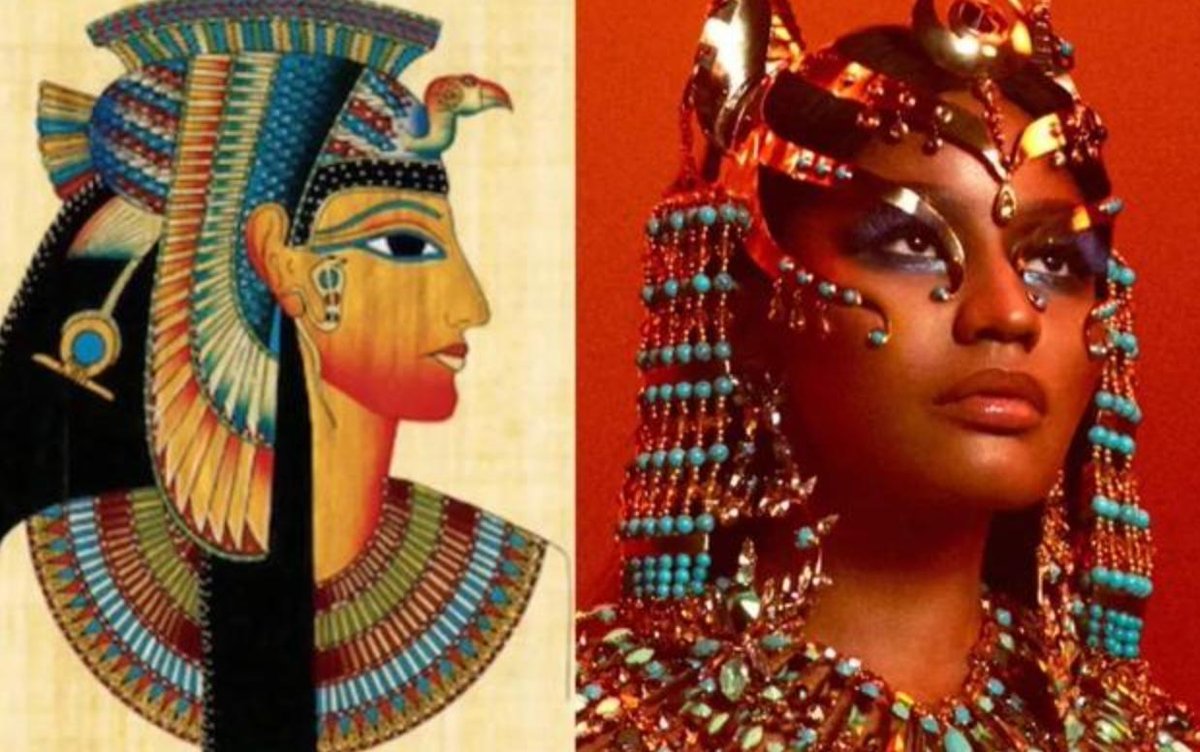
No ruler in history commands quite the same blend of fascination and formidable power as Cleopatra VII. As the last pharaoh of ancient Egypt's Ptolemaic dynasty, her story isn't just one of lavish living and captivating romance; it's a high-stakes geopolitical drama where Cleopatra's reign fundamentally shaped Egypt's fate amidst the relentless expansion of the Roman Republic. Hers was a desperate, brilliant, and ultimately tragic struggle to preserve an empire on the brink, defining an era and leaving an indelible mark on both Western imagination and Egyptian destiny.
At a Glance: Cleopatra's Enduring Impact
- A Political Mastermind: Navigated treacherous Roman politics, securing Egypt's status as a client state for two decades, avoiding immediate annexation.
- Cultural Visionary: The first Ptolemaic ruler to learn ancient Egyptian, she was a polyglot who championed arts, science, and the famed Library of Alexandria.
- Strategic Alliances: Leveraged personal charm and political acumen to forge powerful, though ultimately unstable, alliances with Julius Caesar and Mark Antony.
- Tragic Downfall: Her ultimate defeat at the Battle of Actium and subsequent suicide led directly to Egypt's absorption into the Roman Republic, ending millennia of pharaonic rule.
- A Contested Legacy: Hated by Romans for challenging their dominance, celebrated by Egyptians for her fight, and forever remembered as a complex, powerful woman who defied norms.
- A Mysterious End: The exact circumstances of her death remain a subject of intense historical and criminological debate, challenging the popular asp narrative.
A Princess Ascendant: Claiming a Divided Throne
Born in 69 BC in Alexandria, Cleopatra VII was the daughter of Ptolemy XII and Cleopatra V, inheriting a dynasty increasingly reliant on Roman goodwill. When her father died in 51 BC, the 18-year-old Cleopatra found herself co-ruler with her much younger, 10-year-old brother, Ptolemy XIII. This wasn't a harmonious partnership; Cleopatra quickly moved to consolidate power, declaring herself a "Goddess who loves her Father" and boldly minting coins with her own image.
However, political stability was a mirage in a kingdom plagued by internal strife and the shadow of Rome. By 49 BC, a period of severe crop failures and famine gave Ptolemy XIII's supporters the leverage they needed. They capitalized on the unrest, effectively orchestrating her exile and forcing Cleopatra to flee her own capital. Her initial reign, though brief, showcased her innate political ambition and a willingness to challenge established norms – traits that would define her every move. Her early political maneuvers were a clear indication of her strategic mind.
The Serpent of the Nile Meets the Roman Eagle: An Alliance Forged in Ambition
The year 48 BC brought a seismic shift to Egypt. Following his decisive victory over Pompey at the Battle of Pharsalus, Gaius Julius Caesar's rival sought refuge in Egypt, only to be assassinated by Ptolemy XIII's supporters, hoping to curry favor with Caesar. Instead, Caesar, upon landing in Alexandria, declared his intention to resolve the ongoing dispute between Cleopatra and her brother, asserting Roman authority over Egyptian affairs.
This was Cleopatra's moment. With the help of a loyal servant, Apollodorus, she famously had herself smuggled into Caesar's quarters, reportedly wrapped in a rug or blanket. Her dramatic entrance, combined with her renowned intellect and charm, quickly captivated Caesar. This audacious act cemented their alliance, and with Caesar's backing, Cleopatra saw her brother Ptolemy XIII drowned during the ensuing civil conflict in 47 BC. Caesar then orchestrated a marriage between Cleopatra and her even younger brother, Ptolemy XIV, declaring them joint rulers of Egypt.
The alliance deepened when Cleopatra gave birth to her son, Caesarion, in 46 BC, openly acknowledging Caesar as the father. To commemorate this pivotal moment, she had coins minted depicting herself as the goddess Isis, further intertwining her personal power with divine authority. But even as Egypt seemed to thrive under Roman patronage, the assassination of Julius Caesar in 44 BC plunged the Roman world into chaos once more. Cleopatra returned to Egypt, swiftly eliminating Ptolemy XIV and appointing Caesarion as her co-ruler, cementing her and her son's position at the pinnacle of Egyptian power.
The Queen and the General: Antony's Love and Roman Expansion
The political vacuum left by Caesar's death soon saw the rise of new Roman power players, most notably Mark Antony and Octavian. In 41 BC, Antony summoned Cleopatra to Tarsus, ostensibly seeking financial and military support for his campaigns. Cleopatra, ever the theatrical strategist, arrived not as a supplicant but as a goddess. Dressed as Venus, she sailed up the Cydnus River on a luxurious barge, perfumed with exotic scents, utterly captivating Antony.
This meeting ignited one of history's most famous and consequential love affairs. Antony confirmed Cleopatra's status as Egypt's legitimate ruler, granted her control over Cyprus, and even ordered the execution of her sister, Arsinoe, effectively eliminating any rival claims to the Egyptian throne. For a time, Cleopatra was the undisputed queen.
Antony's subsequent return to Rome saw him marry Octavian's sister, Octavia, a political move to solidify the triumvirate. But his ambitions in the East, particularly a failed campaign against Parthia three years later, drew him back to Cleopatra. He formally married her, despite his existing Roman marriage, and they had a set of twins, followed by another son. Antony's commitment to Cleopatra deepened as he gifted her and their children significant territories in the eastern Roman Empire, further entwining their destinies and, critically, aligning Egypt's future with his own. Understanding the intricate diplomacy between Rome and Egypt reveals how fragile these personal alliances often were.
A Clash of Empires: The Final Betrayal and Actium
The bond between Antony and Cleopatra became a dangerous flashpoint in Roman politics. By 32 BC, the rivalry between Antony and Octavian had escalated into open conflict. Antony, perhaps emboldened by Cleopatra's vision and Egypt's wealth, began making plans that deeply alienated Rome. He aimed to establish Alexandria, not Rome, as the capital of the Roman Empire and even declared Caesarion, Cleopatra's son with Caesar, as Caesar's rightful heir – a direct challenge to Octavian's own adopted status.
Octavian, a master of propaganda, seized the opportunity. He publicly revealed Antony's will, which detailed vast land allocations to Cleopatra and her children and, most outrageously to Roman sensibilities, requested that Antony's body be buried in Alexandria. This enraged the Roman populace, allowing Octavian to strip Antony of his official titles, declare him a public enemy of Rome, and critically, declare war not on Antony, but on Cleopatra herself. This framed the conflict as a defense of Roman values against an exotic, dangerous foreign queen.
The inevitable showdown occurred in 31 BC at the Battle of Actium, off the western coast of Greece. Antony and Cleopatra amassed a formidable fleet of 500 warships and approximately 90,000 infantry and cavalry. Octavian countered with 400 ships and about 100,000 infantry and cavalry. However, Antony's forces were significantly weakened by malaria, and his massive ships were slow and unwieldy. Compounding his woes, key generals defected, betraying his battle plans and allowing Octavian to blockade Antony and Cleopatra's fleet.
Seeing no viable path to victory or escape, Cleopatra made a desperate decision. She led the Egyptian fleet in a daring breakout, withdrawing from the battle and sailing back to Egypt. Antony, witnessing her retreat and perhaps consumed by despair, abandoned his own struggling forces and followed her. Octavian achieved a decisive victory, and the fate of Egypt, and indeed the Roman world, was sealed. A deeper dive into the Battle of Actium reveals the pivotal role of strategy and morale in ancient warfare.
The Last Stand: Fall of Egypt and Cleopatra's End
With the victory at Actium, Octavian's path to absolute power was clear. In 30 BC, he launched his final invasion of Egypt. Antony, facing utter defeat, fell on his own sword, taking his own life. Cleopatra, captured by Octavian's forces, was brought before him. Ever the strategist, she attempted to use her legendary charm and intellect to seduce Octavian, just as she had Caesar and Antony before him. But Octavian, a colder, more calculating figure, was impervious to her allure.
Realizing her fate was to be paraded as a captive in Rome, Cleopatra chose a different end. According to popular legend, she arranged for a basket of figs, smuggled past her guards by her loyal maidservants, to contain an asp (Egyptian cobra). She then wrote a secret letter to Octavian, requesting to be buried alongside Antony, and allowed the venomous snake to bite her, ending her life. Her two devoted maidservants reportedly followed suit, dying by her side.
With Cleopatra's death, the Ptolemaic dynasty, which had ruled Egypt for nearly three centuries, came to an end. Egypt, the wealthiest kingdom in the Mediterranean, was formally annexed into the Roman Republic, becoming a mere province. The land of the pharaohs, with its ancient temples and fertile Nile, was now firmly under Roman dominion, forever changing its historical trajectory.
Cleopatra's Enduring Legacy: Governance and Cultural Impact
Despite the dramatic end to her reign, Cleopatra's two decades on the throne left an indelible mark on Egypt. Her rule was not simply a series of romantic entanglements; it was a period of astute political management and cultural flourishing, largely achieved under immense external pressure.
Political Savvy: A Shield Against Annexation
Cleopatra employed her formidable intellect and cultural understanding to govern Egypt, skillfully maneuvering between the powerful Roman generals who sought to dominate her kingdom. Her ultimate goal was to ensure Egypt remained a sovereign, albeit client, state, rather than being swallowed whole by the Roman Republic. For 22 years, she largely succeeded, maintaining a precarious peace that allowed Egypt to prosper. During her reign, Alexandria, the brilliant capital, reached new heights of splendor, and Egypt experienced an unprecedented period of affluence, with its population swelling to over 5 million. Her economic policies and ability to leverage Egypt's vast agricultural wealth were crucial in sustaining both her court and her alliances.
Cultural Patronage: The Scholar Queen
What truly set Cleopatra apart from many of her Ptolemaic predecessors was her profound engagement with Egyptian culture. She was a polyglot, reportedly fluent in nine languages, and notably, the first Ptolemaic ruler to bother learning ancient Egyptian itself – a powerful symbolic gesture that resonated with her subjects. She wasn't just a political figure; she was an intellectual.
Cleopatra actively sponsored the arts and sciences, frequently participating in academic discussions at the Museum of Alexandria, a renowned center of learning. During her rule, the legendary Library of Alexandria reportedly housed a staggering 700,000 volumes. Even after parts of the library were tragically damaged by fire during Caesar's siege, Cleopatra demonstrated her commitment to knowledge by reportedly commissioning efforts to recover an estimated 200,000 damaged manuscripts. Her dedication ensured Alexandria remained a beacon of intellectual achievement during her time. To learn more about Cleopatra beyond her political sphere, one must appreciate her intellectual contributions.
Historical Echoes: A Queen's Complex Reputation
Cleopatra’s story resonates through history, but her portrayal has shifted dramatically depending on the perspective.
- The Roman View: For Romans, Cleopatra was a figure of both fear and loathing. Historian Dio Cassius described her as "a woman of surpassing beauty," yet the Roman narrative largely cast her as an exotic temptress who corrupted their great leaders and almost turned Rome itself into an Egyptian province. She represented a dangerous foreign influence, and her defeat was celebrated as a victory for Roman morality and dominion. Her actions were seen as a direct threat to the Republic's integrity, justifying Octavian's crusade against her.
- The Egyptian View: In contrast, for many Egyptians, Cleopatra was a warrior queen, a courageous figure who fought fiercely to preserve the independence of a vulnerable nation against an overwhelming imperial power. They lauded her for securing 22 years of peace and prosperity for her people, a remarkable feat given the turbulent geopolitical landscape. She was seen as a defender of their sovereignty, however diminished.
- Modern Interpretations: Today, Cleopatra is often regarded as a proto-feminist icon, a powerful woman operating within a patriarchal world. British historian Alice Barnes-Brown highlights her triumph as one of "charm, intelligence, and ambition" in conquering figures like Caesar and Antony. Her life has inspired countless literary and artistic works, cementing her image as the ultimate romantic "femme fatale," a woman whose beauty and cunning could bend the most powerful men to her will, yet whose ambition was always tied to the fate of her nation. Cleopatra's broader cultural impact transcends her historical reign, influencing art and literature for millennia.
Unraveling the Mystery: Debates Around Cleopatra's Death
While the story of Cleopatra's suicide by asp is deeply ingrained in popular culture, scholars and forensic experts continue to debate the true circumstances of her death. Was it really a self-inflicted serpent bite, or was something far more sinister at play?
British criminal psychologist Richard Green has raised significant doubts about the traditional asp narrative. He points out the impracticality of concealing a large cobra, which averages 2.5 meters in length, within a basket of figs. Furthermore, he questions the likelihood of a successful, swift suicide by asp, given that Cleopatra's chambers were reportedly only minutes away from Octavian's. Had she been bitten, medical intervention might have been possible.
Adding to the skepticism, Oxford University tropical medicine professor David Warrell highlights that venomous snakes, particularly cobras, do not always inject venom with every bite. The probability of venom delivery is roughly 50%. For three individuals—Cleopatra and her two maidservants—to simultaneously and successfully die from snakebite under such circumstances, the statistical odds are incredibly slim.
Based on these inconsistencies, Richard Green has advanced the theory that Cleopatra was murdered. His primary suspect? Octavian himself. The motive would be simple and compelling: to eliminate a powerful rival and secure his unchallenged ascent to become the sole ruler of the Roman Republic. As compelling evidence, Green points to Octavian's subsequent execution of Caesarion, Cleopatra's son with Caesar and Antony's designated heir to the empire. Removing Caesarion ensured there were no legitimate male heirs to challenge Octavian's claim, making Cleopatra's death, if orchestrated, a calculated political maneuver. This ongoing debate underscores how even the most iconic historical narratives can be subject to critical re-examination.
Beyond the Myths: Cleopatra's Real Impact on Egypt's Destiny
Cleopatra's reign, though ultimately ending in tragedy for her dynasty, was a remarkable period of resilience and defiance. For over two decades, she fought tirelessly to keep Egypt independent, leveraging her formidable intelligence, strategic alliances, and diplomatic prowess. Her struggle was not merely about personal power or romantic entanglements; it was a desperate battle for the survival of an ancient kingdom caught between warring Roman factions.
Her story is a powerful reminder that history is often shaped by the choices of extraordinary individuals. Cleopatra's strategic choices, her willingness to engage directly with the most powerful men of her era, and her ultimate downfall irrevocably altered Egypt's trajectory, transforming it from a proud, independent kingdom into a vital, yet subjugated, Roman province. While the pharaonic era ended with her, Cleopatra's legacy of ambition, resistance, and intellectual brilliance continues to inspire and intrigue, marking her as one of history's most pivotal figures whose personal fate was inextricably linked to the destiny of a nation.