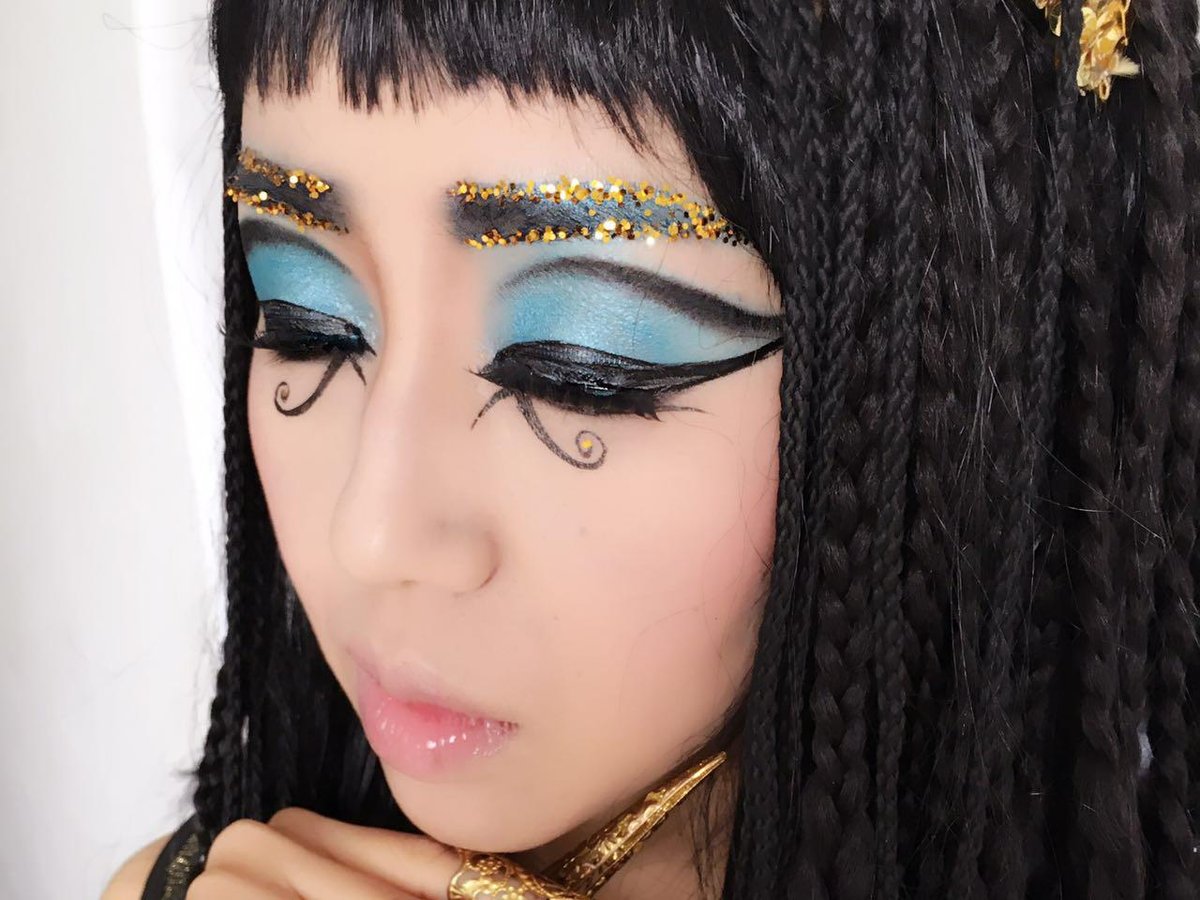
Cleopatra VII Philopator. The name alone conjures images of power, seduction, and the dramatic twilight of an ancient empire. Yet, for all her legendary status, many fundamental questions about Egypt's last pharaoh remain shrouded in mystery and fierce debate. We think we know her story, but dig a little deeper, and you'll find that much of what we "know" is built on speculation, fragmented records, and centuries of artistic interpretation. The true depth of these unknowns, particularly regarding her final resting place, is a fascinating testament to history's persistent secrets.
At a Glance: Cleopatra's Lingering Questions
- Her Burial Site: Despite ancient accounts of her entombment with Mark Antony, Cleopatra's tomb remains undiscovered.
- Archaeological Hurdles: A significant portion of ancient Alexandria, including potential burial sites, lies submerged under 20 feet of water, making excavation immensely challenging.
- Ongoing Searches: Dedicated archaeologists like Kathleen Martínez have spent years searching specific sites like Taposiris Magna, uncovering artifacts but no definitive tomb.
- Her True Appearance: Beyond idealized busts and coins, her exact physical features and the source of her legendary charm are still debated.
- Motivations & Relationships: The precise nature of her political and romantic alliances with Julius Caesar and Mark Antony—were they pure ambition, genuine affection, or a blend of both?
- The Details of Her Death: While widely accepted she died by asp, the specifics of this dramatic suicide are not fully confirmed, leaving room for alternative theories.
- Enduring Legacy: The continuous reinterpretation of her character, from femme fatale to brilliant stateswoman, highlights the subjective nature of historical narrative.
The Pharaoh's Ghost: Where is Cleopatra Buried?
Of all the unresolved questions surrounding Cleopatra, none looms larger than the mystery of her final resting place. According to ancient historians like Plutarch, Cleopatra took her own life on August 12, 30 BC, at the age of 39. Her body was mummified and, as per Augustus's decree, she was entombed alongside her beloved Mark Antony. Yet, more than two millennia later, their shared tomb—the last bastion of a legendary love and a fallen dynasty—has never been found.
Imagine trying to locate a needle in a haystack, except the haystack is also mostly underwater, buried beneath shifting sands, and riddled with countless other priceless historical remnants. That's the challenge facing archaeologists today. The ancient city of Alexandria, once Cleopatra's vibrant capital, has largely succumbed to the Mediterranean Sea. Experts estimate that a significant portion of the old city, including areas where a royal tomb might have been located, now lies beneath approximately 20 feet of water. This makes traditional land-based excavation virtually impossible and underwater archaeology an incredibly complex and costly endeavor.
The Decades-Long Hunt: From High-Profile Claims to Persistent Digs
The quest for Cleopatra's tomb has seen its share of dramatic announcements and quiet perseverance. For years, the world eagerly watched as prominent figures in Egyptology ventured into the unknown.
One notable instance occurred in 2006 when then-head of Egypt's Supreme Council of Antiquities, Zahi Hawass, declared that the tomb might be found at Taposiris Magna, an ancient temple site west of Alexandria. The excitement was palpable, but as often happens in archaeology, definitive proof remained elusive, and Hawass later retracted the claim, stating no such discovery had been made. It was a stark reminder of the immense difficulty in substantiating such monumental findings.
Despite the setbacks, the search continues with unwavering dedication. Archaeologist Kathleen Martínez, a former lawyer from the Dominican Republic, has spearheaded a decade-long excavation at Taposiris Magna. Driven by a compelling theory, she believes that Cleopatra chose this site, associated with the goddess Isis (whom Cleopatra identified with), for her eternal rest. Over the years, Martínez's team has unearthed hundreds of smaller artifacts—statues, coins, and a necropolis with Greco-Roman style mummies—all hinting at the site's importance during Cleopatra's era. However, the elusive secret burial chamber, the grand prize of their extensive search, has yet to materialize. Martínez remains convinced that the tomb lies hidden somewhere within the sprawling temple complex, perhaps in a secret passage or an as-yet-undiscovered crypt. Her conviction, shared by many, keeps the hope alive, even as the sands of time continue to guard their secrets.
Beyond the Burial: Other Mysteries and Enduring Debates
While the missing tomb is perhaps the most tangible mystery, Cleopatra's life and persona are riddled with numerous other enigmas and ongoing scholarly debates. Her story is not a neatly packaged narrative but a complex tapestry where threads of historical fact, biased accounts, and dramatic legend are interwoven. For a broader understanding of her life and reign, you might want to delve into Everything about Cleopatra.
Her Face and Form: Was She Beautiful or Just Brilliant?
The popular image of Cleopatra, fueled by Hollywood and art, is one of breathtaking beauty. Think Elizabeth Taylor's iconic portrayal. Yet, ancient accounts and surviving artifacts tell a more nuanced story, sparking a debate that continues to intrigue historians and enthusiasts alike: what did Cleopatra truly look like, and was her allure rooted in physical beauty or something far deeper?
Coins from her reign, often seen as the most reliable contemporary images, typically depict her with a prominent nose, a strong jawline, and a rather masculine profile—features that might not align with conventional standards of beauty. Plutarch, an ancient Greek biographer, famously wrote that her beauty was "not of itself so remarkable as to strike those who saw her." Instead, he emphasized her "irresistible charm," her captivating voice, and her intellectual brilliance. She was a master of languages, a shrewd negotiator, and a charismatic speaker who could effortlessly engage with the most powerful men of her time.
This leads to the fascinating question: was her legendary allure primarily a product of her intellect, wit, and charisma, rather than purely aesthetic appeal? The debate highlights how history often conflates physical beauty with political power, and in Cleopatra's case, it's clear her influence stemmed from a formidable combination of intelligence, strategic acumen, and an unparalleled ability to wield soft power.
Love or Power? The Nature of Her Relationships
Cleopatra's liaisons with Julius Caesar and Mark Antony are legendary, often framed as passionate love affairs that swayed the course of empires. But were these relationships driven by genuine affection, cold political calculation, or an intricate dance between the two? This is a question historians have pondered for centuries.
With Julius Caesar, Cleopatra saw an opportunity to restore Egypt's dwindling power and secure her throne. She famously smuggled herself into his chambers rolled in a carpet, a bold move that immediately captivated the Roman general. Their relationship produced a son, Caesarion, solidifying a powerful, if controversial, alliance. Was it love? Perhaps. Was it strategic? Absolutely. Both benefited immensely, consolidating power and influence in a turbulent political landscape.
Her relationship with Mark Antony, forged after Caesar's assassination, appeared even more deeply intertwined. They had three children together and famously ruled side-by-side, challenging the emerging power of Octavian (later Augustus). Their story culminates in a dramatic double suicide, cementing their place as one of history's most tragic couples. Many historians argue that Antony, deeply infatuated, became increasingly blinded by Cleopatra's influence, leading to strategic errors that ultimately doomed them both. Others contend that Cleopatra was equally, if not more, invested in their joint project of an Eastern Roman-Egyptian empire, and her feelings for Antony were profound. The truth likely lies in a complex interplay of personal connection and geopolitical necessity, a testament to Cleopatra's mastery of both her heart and her statecraft.
The Asp's Kiss: How Did She Really Die?
The iconic image of Cleopatra dying from the bite of an asp, a venomous Egyptian cobra, is deeply ingrained in popular culture. Shakespeare immortalized it, and countless paintings and films have depicted it. However, the precise details of her suicide remain surprisingly uncertain and a subject of historical scrutiny.
Ancient sources generally agree on the method but differ on specifics. Plutarch mentions the asp, brought in a basket of figs, but also notes that "no mark of a bite, or any symptom of poison" was visible on her body. He even suggests that she might have used a poisoned hairpin. Cassius Dio, another Roman historian, offers similar accounts but also expresses skepticism about the asp story, acknowledging other possibilities, including poisoned ointment.
The ambiguities fuel several key debates:
- Was it definitively an asp? While symbolically powerful, the lack of visible bite marks makes some question the specific animal. Perhaps a different, smaller snake whose bite marks would be less obvious, or even multiple small snakes.
- How many asp bites? Some theories suggest multiple bites, which would be extremely painful and drawn out. Other narratives suggest a single, swift strike.
- Was it an "asp" or another form of poison? The term "asp" could have been a general term for a venomous snake, and the story itself might have been embellished to create a more dramatic and noble end for a queen, rather than a mundane poisoning.
- Was it truly suicide? While Augustus would have wanted to parade her in Rome as a captive, some speculate whether she might have been assisted in her death to prevent such a humiliation. However, the overwhelming evidence points to her intentional choice.
The enduring uncertainty around her death adds to the mystique of a queen who controlled every aspect of her life, even its end.
Cleopatra's Legacy: Femme Fatale or Visionary Leader?
Cleopatra's story has been told and retold countless times, often reflecting the biases and preoccupations of each era. This has created a lasting debate about her true legacy: was she primarily a manipulative "femme fatale" who seduced powerful men for political gain, or a visionary, intelligent ruler fighting tooth and nail for the survival of her ancient kingdom?
Roman historians, particularly those writing after her defeat, largely painted her as a dangerous, exotic temptress who corrupted virtuous Roman generals like Antony. This narrative served to justify Rome's conquest of Egypt and demonize a formidable enemy. This "vamp" image has persisted throughout history, perpetuated by literature and art that often focus on her sexuality over her statesmanship.
However, a more balanced perspective, increasingly favored by modern historians, acknowledges her exceptional political acumen, linguistic prowess, and unwavering dedication to Egypt's prosperity. She inherited a kingdom in decline, facing constant threats from Rome. Her alliances with Caesar and Antony can be seen not just as personal relationships but as calculated, albeit ultimately unsuccessful, strategies to preserve Egyptian independence and secure her dynasty's future. She commanded armies, managed a sophisticated economy, and engaged in complex diplomacy. Her tragic end, fighting for her country against overwhelming odds, is a testament to her fierce spirit and ambition. The ongoing debate about her legacy reminds us that history is rarely black and white, and powerful women, in particular, often face deeply ingrained prejudices in how their stories are remembered.
The Allure of the Unknown: Why These Mysteries Captivate Us
Why do these ancient enigmas continue to hold such a powerful grip on our collective imagination? The appeal of Cleopatra's unsolved mysteries isn't merely academic; it's profoundly human.
Firstly, there's the magnetic pull of the undiscovered. The idea that a figure as globally recognized as Cleopatra could have her final resting place completely hidden from us, just beyond our grasp, is tantalizing. It speaks to the vastness of history and the limits of our knowledge, reminding us that even with all our technology, the past still guards its secrets.
Secondly, these uncertainties allow for interpretation and imagination. Where facts are scarce, our minds fill the gaps, creating a richer, more personal connection to the past. Debates about her appearance or the true nature of her relationships invite us to ponder human motivations, power dynamics, and the complexities of decision-making under immense pressure. It lets us step into her world, even if only speculatively.
Finally, Cleopatra herself was a figure of immense contradiction and complexity. She was a pharaoh in an era dominated by men, an Egyptian queen with Macedonian Greek heritage, a ruler of immense power who ultimately fell to Roman might. Her story is one of survival, ambition, love, betrayal, and tragedy. The unresolved questions surrounding her only deepen this complexity, ensuring that her legend continues to evolve and fascinate for generations to come.
Looking Ahead: The Future of Discovery
While the challenges are immense, the search for Cleopatra's truth is far from over. Advances in technology, particularly in remote sensing, ground-penetrating radar (GPR), and underwater archaeological techniques, offer new hope. Sophisticated sonar mapping can create detailed three-dimensional images of submerged landscapes, potentially revealing structures beneath the seafloor that were once part of ancient Alexandria. AI-powered image analysis could help identify patterns in satellite imagery or historical maps that human eyes might miss.
Moreover, new interpretations of ancient texts, combined with meticulous archaeological work, continue to shed light on obscure corners of history. Each small find, each re-evaluation of an old theory, brings us a step closer. Perhaps one day, a future expedition, armed with revolutionary tools and persistent dedication, will finally unearth the magnificent tomb of Cleopatra and Mark Antony, forever changing our understanding of their intertwined destinies and the final chapter of ancient Egypt.
Cleopatra’s story remains a captivating tapestry woven from historical fact, dramatic legend, and persistent unknowns. Her life continues to challenge our assumptions, fuel our curiosity, and remind us that even the most famous figures in history can still hold profound secrets. What we still don't know about Cleopatra is, in many ways, just as compelling as what we do know, ensuring her place not just as a historical icon, but as an enduring enigma.